Argentina is the eighth-largest country in the world, covering roughly 2.78 million square kilometers, per Wikipedia. That single fact shapes every travel plan. You cannot see Patagonia, Buenos Aires, Iguazú and the Andean northwest in one short trip, and trying to is the most common first-timer mistake.
The better plan is to pick one or two regions and go deep. The country stretches from subtropical forests in the north to the Drake Passage in the south, so distances are huge and climates vary wildly. This guide breaks Argentina into four travel regions, explains what each offers, and shows how to build a realistic route.
How big is Argentina, really?
Argentina is the second-largest country in South America after Brazil and the largest Spanish-speaking country on earth, according to World Atlas. It borders five countries: Chile to the west, Bolivia and Paraguay to the north, and Brazil and Uruguay to the northeast, with the South Atlantic Ocean on its eastern edge.
Ten-plus hours of flying separate the far north from the far south. Driving takes days, not hours. The practical takeaway: treat Argentina like Europe, not like one destination. Most first-time itineraries combine the capital with one distant region, connected by domestic flights.
The country is divided into 23 provinces plus the autonomous city of Buenos Aires, the capital and largest city. Four other cities top one million people: Córdoba, Rosario, Mendoza and San Miguel de Tucumán, per World Atlas. Each anchors a different travel corridor.
What does Buenos Aires offer first-time visitors?
Buenos Aires is the natural entry point. Almost every international flight lands there, and the city delivers the country's cultural core: tango halls, European-style architecture, and a steakhouse culture with few rivals. Plan three or four days before heading onward.
The city rewards walking. Neighborhoods like San Telmo and Palermo each carry their own character, and the riverside setting on the Río de la Plata estuary gives the port city its shape. For the sound side of the city, the tango scene runs from tourist dinner-shows to neighborhood milongas, and the economics of who pays whom are worth understanding before you go. Our explainer on the milonga economy: who pays for tango in Buenos Aires walks through it.
Buenos Aires is also where visitors first meet the peso. Argentina has long run a dual exchange-rate system, and the gap between the official rate and the street rate changes what everything costs. Read up before exchanging money: our guide to the blue dollar and Argentina's two exchange rates explains the mechanics.
What is Patagonia, and when should you go?
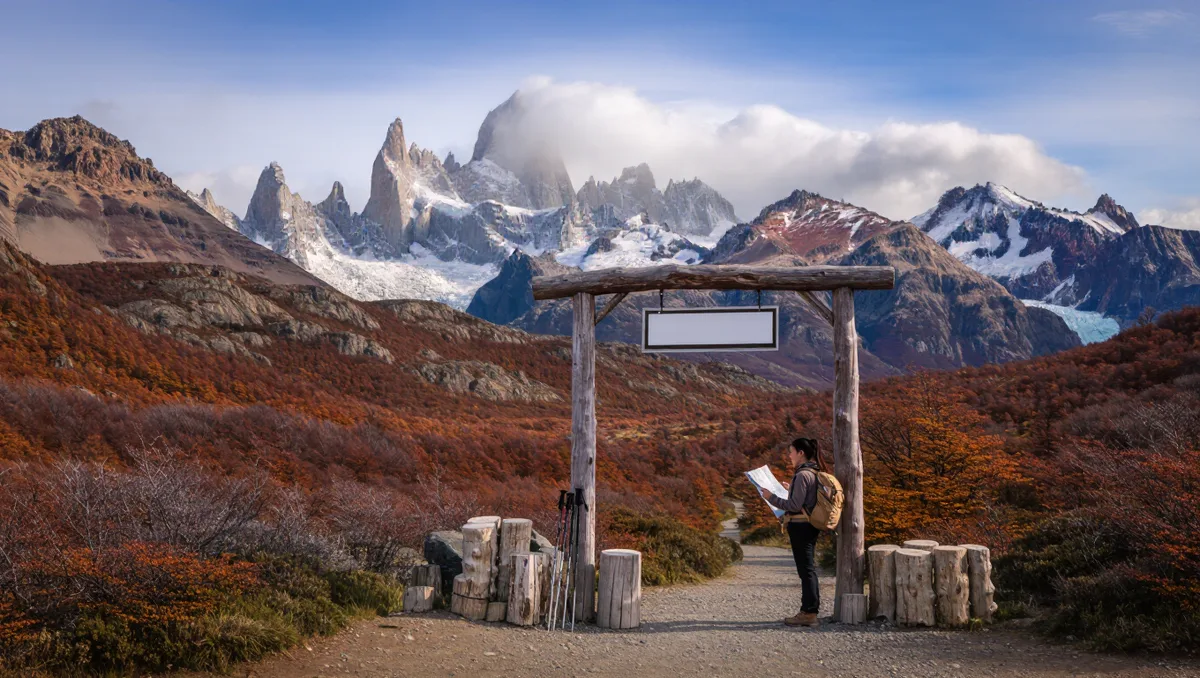
Patagonia is the vast southern plateau that covers the southern half of the country and runs to the tip of the continent, per World Atlas. It is windswept, steppe-like country that descends to a rugged Atlantic coast of gulfs and inlets. Travelers come for glaciers, trekking, and the end-of-the-world feeling of Tierra del Fuego, the archipelago Argentina shares with Chile.
Two practical anchors: Lake Argentino, the country's largest lake, sits in the Patagonian lake district and serves as the gateway to the glacier country. Further south, the Beagle Channel provides the navigational route between the Atlantic and Pacific at the continent's southern edge. The southernmost point of mainland Argentina, Cape San Pío, lies in Tierra del Fuego.
Timing matters more here than anywhere else in the country. Patagonia's seasons are extreme; summer offers long daylight, winter brings short days and closures in mountain areas. Because the region's tourism runs on international visitors, pricing and logistics differ from the north. Our piece on how Patagonia's tourism economy works covers the dollar-priced dynamics. We covered a connected angle in The far south, priced in dollars: how Patagonia's tourism economy works.
What should you see in the Andean northwest?
The northwest is Argentina's other world. The Andean region in the west runs along the Chilean border and includes high plateaus, deep valleys, salt pans, and edges of the Atacama Desert, one of the driest places on earth, per World Atlas. Provinces like Salta and Jujuy anchor the route, with multicolored hills, colonial towns, and high-altitude desert crossings toward Bolivia.
This is also where the country's pre-Columbian history sits. The Inca Empire expanded into the northwest before Spanish colonization, and the regional languages tell the story: Guaraní is spoken in Corrientes, Quechua in Santiago del Estero, according to Wikipedia. The landscape demands slow travel. Roads climb, altitudes bite, and distances between towns are long.
The region's food culture differs from the pampas, too. Empanadas, stews and high-altitude wines replace the beef-centric cooking of the plains. Salta, with a metro population of about 719,000 per World Atlas, makes the most practical base.
How do you build a realistic Argentina itinerary?
Practical steps for a first trip of one to two weeks:
- Start in Buenos Aires. Three or four days covers the capital without rushing.
- Choose one distant region. Patagonia for glaciers and trekking, the northwest for desert and Andean culture, or Mendoza for wine country at the foot of the Andes.
- Fly the long legs. Domestic flights connect the capital to every major region; ground transport works within regions, not between them.
- Add one side trip if time allows. Mendoza pairs well with a capital-plus-Patagonia route; the wine region sits at the edge of the Andes, where Aconcagua, the highest peak in the western hemisphere, rises 6,961 meters, per World Atlas.
What this means in practice: a two-week trip comfortably holds Buenos Aires plus one or two regions. A one-week trip holds the capital plus one. Anything more turns the holiday into a bus schedule.
What should you know before you go?
Money is the big one. The peso's dual exchange rates mean the same dinner can cost very different amounts depending on how you pay, so sort your approach before arrival. The next is scale: check distances on a map before promising yourself five destinations. Time zones help, though; Argentina sits at UTC–3 year-round, per Wikipedia, with no seasonal change to track.
Language is the last consideration. Spanish is the national language, and while tourist areas manage English, the northwest and Patagonia reward a few basic phrases. Pack for the region, not the country: a Patagonia trip needs wind layers and, in shoulder seasons, serious rain gear; the northwest needs sun protection at altitude.
The evidence here establishes the geography, the regions and the scale. What no source settles is the ideal trip length for any one traveler, which depends on season, budget and pace. Pick the region that matches the calendar, and Argentina rewards the restraint.