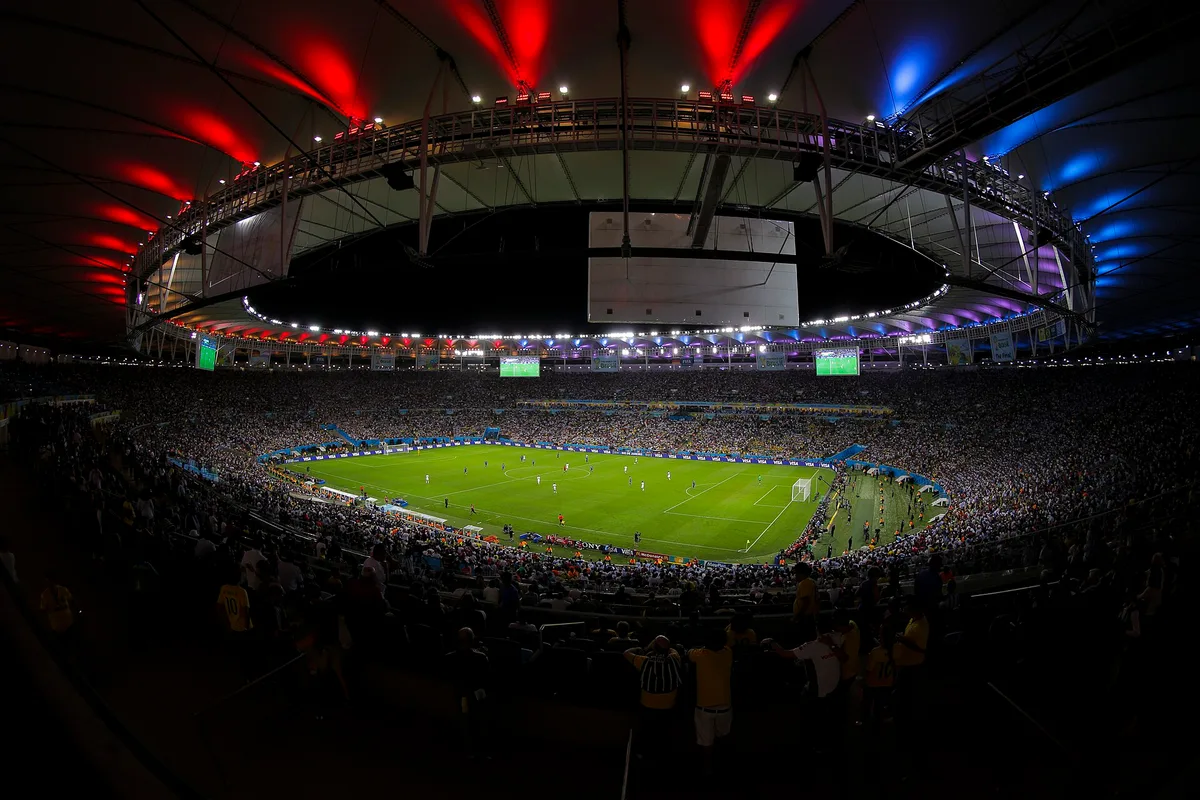
Argentina's World Cup history is less a sports record than a national autobiography. The country of roughly 45 million people, per World Atlas, treats the tournament as a mirror: every generation reads its own mood into it. The joy, the grief and the arguments all land on the same twenty-odd players in a light blue and white shirt.
That is why the Argentina desk keeps returning to football. No export, no election and no currency move moves the country the way a World Cup match does. When the national team plays, offices empty, streets fill, and the whole country watches the same ninety minutes at once.
This piece walks through the moments that shaped that bond. It stays with what the tournament has meant to Argentina's identity: the early promise, the long heartbreaks, the late redemption, and the culture that grew around all of it.
Why does football matter so much in Argentina?
Football arrived in Argentina through port cities and schoolyards, and it never left. The game spread fast through Buenos Aires and the industrial towns around it, and it became a sport anyone could play. No expensive equipment, no barriers. A ball and a street were enough.
That accessibility shaped the style the country became known for. Argentine football prizes improvisation, close control and a certain theatrical intelligence. The player who sees a pass nobody else sees is the hero, not the workhorse. It is a style that mirrors how the country sees itself: clever, expressive, a little melancholic.
The national team turned that style into a shared language. Argentina is geographically enormous, stretching from the subtropical north to the windswept far south, and its regions differ sharply. Football is the one thing that speaks everywhere at the same volume. When the team takes the field, a nation that often argues with itself argues with one voice.
What did the early heartbreaks teach the country?
Argentina's tournament story begins with promise and near misses. The early national sides were strong, and the country hosted and contested the sport's biggest stage at moments when football was becoming a global spectacle. But the defining lessons came from defeat.
Losing a final is a particular kind of national event. It is public, collective and impossible to look away from. Argentine football culture absorbed those losses and built a mythology around them: the what-ifs, the goals that went in inches wide, the players who carried the pain for decades. Supporters talk about old finals the way families talk about old quarrels.
What this means is simple. The heartbreak is not a footnote to the glory; it is half of the story. A country that has tasted both extremes at the same tournament treats every new campaign with a mix of dread and certainty. That emotional whiplash is the core of the Argentina World Cup experience, and it is why neutral viewers around the world find Argentine fans so intense.
How did heartbreak turn into dynasty?
The shift from tragic figure to serial winner did not happen overnight. It came through generations of players who grew up on those stories and refused to repeat them. The turning point, in the popular memory, is less a single match than a slow accumulation: breakthrough stars, hard campaigns, near exits survived, and finally the championships that turned old grief into material for new songs.
The number ten shirt sits at the center of it. Argentina has produced playmakers whose fame outgrew the sport, artists in boots whose highlights circulate decades later. Each one carried the same burden: not just to win, but to win beautifully, in a way that honored everyone who came before. That burden is the dynasty's real engine. Winning alone was never enough for this audience.
Our analysis of the pattern is that Argentina's football identity rewards narrative over results. A title won without drama satisfies less than one won through suffering. The current generation of supporters, many of them young, inherited both the trophies and the trauma, and they treat the team's history as a living thing rather than a museum piece.
How does the country actually watch the World Cup?
The viewing ritual is a culture of its own. Families and friends gather around a grill, a television and a long afternoon, and the match becomes an excuse for the country's most beloved social institution. The connection between match days and the shared table is deep enough that we cover it separately in Asado Culture: How Argentina Does the Barbecue.
In Buenos Aires, the celebrations spill into the same streets and plazas that host the city's other communal rituals. Music is never far away; the overlap between match-day crowds and the city's musical life is one of the things that makes the capital's football culture distinct, a theme explored in The milonga economy: who pays for tango in Buenos Aires. Chants borrow melodies from everywhere. The stadium and the street trade songs back and forth.
The tournament also intersects with the country's economic moods. Argentine fans have learned to celebrate against a backdrop of inflation and currency anxiety, and the blue-and-white joy often doubles as a release valve. Readers who want that backdrop will find it in What is the blue dollar, and why does Argentina have two exchange rates?. The football gives the country something the economy rarely does: a result everyone can agree on.
What does the World Cup mean for Argentina now?
Today the tournament functions as Argentina's global storefront. When the national team plays, the country gets a kind of attention that no trade fair or tourism campaign can buy. Viewers who know nothing about the Pampas or the lithium fields still learn the shapes of Argentine names and the sound of Argentine songs. For a country that often feels overlooked in international coverage, that visibility matters.
The official tourism side understands the pull. Visit Argentina leans on the country's culture and landscapes as its calling card, and football sits naturally inside that pitch. A visitor drawn in by a final can find everything else: the wine country, the glaciers, the capital's nightlife.
What remains unknown is always the next campaign. That is the bargain Argentine fans accept. The past guarantees pride but not the future, and every four years the country submits its identity to a fresh verdict. The evidence of history says the verdict will be dramatic either way. The country would not have it any other way.