Asado is Argentina's barbecue, and it is three things at once: the grilling method, the meat itself, and the long social event built around both. It runs on live wood coals, coarse salt, and a fixed sequence of cuts over three to five hours, according to Argentine Asado's complete guide to the tradition. Nobody rushes, and nobody else touches the grill.
The word comes from the Spanish asar, to roast, and in Argentina it names the whole ritual rather than a single dish, as WebstaurantStore explains in its guide to the tradition. On a Sunday in Buenos Aires, the fire goes on at noon and the vacío comes off in late afternoon. In between sits the choripán, the conversation, and the country's most durable social institution.
What exactly is an asado?
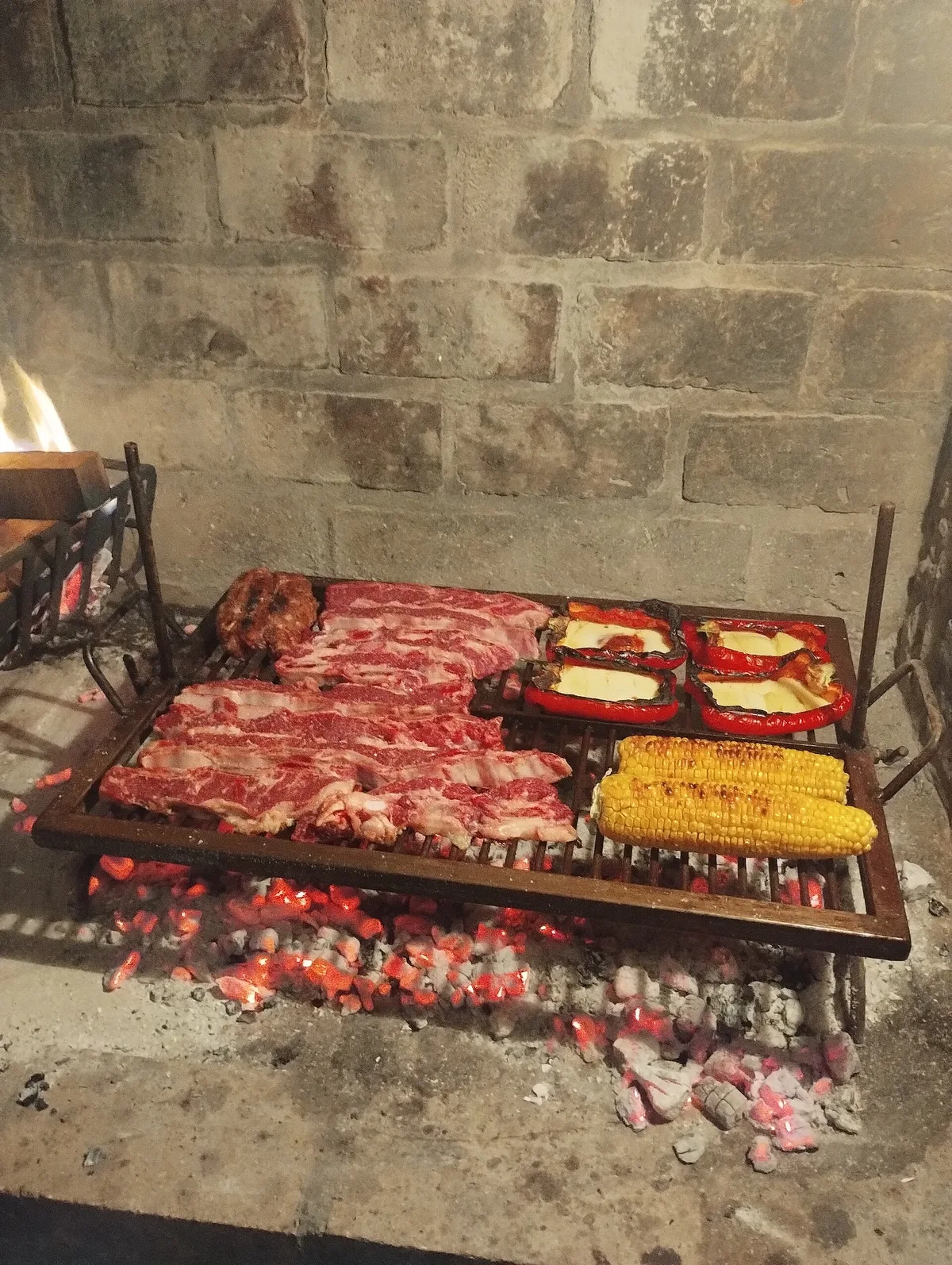
An asado is a barbecue in both senses: the technique of cooking meat over live fire and the gathering that surrounds it. Per Wikipedia's entry on asado, the event is traditional across Argentina and Uruguay, as well as in Brazil's Rio Grande do Sul, Chile, and Paraguay. A typical Argentine version features beef, pork, chicken, chorizo, and morcilla, cooked on an open fire or a grill called a parrilla, with red wine and simple salads alongside.
One person runs the whole thing. That cook is the asador, sometimes called the parrillero, and the role carries real authority. Guests do not reach for the tongs. The asador manages the fire from the moment it is lit until the last cut leaves the grill, adjusting heat by raising or lowering the grate rather than touching the coals.
Why does the fire matter so much?
Because asado is cooked over embers, not flames. The defining technique, per the Argentine Asado guide, is moving coals from a side fire pit to beneath the grill, keeping the meat over steady live heat instead of open flame. Grease dripping onto flames creates smoke that spoils the flavor, so the area directly under the meat is often kept clear of coals.
The fuel is chosen with care. Charcoal in Argentina is often made from native hardwoods such as quebracho or algarrobo, while pine and eucalyptus are avoided because their resins smell strong, Wikipedia notes. The fire is lit well before the first piece of meat goes on, roughly 90 minutes ahead, so the coals have time to settle.
Temperature is read without a thermometer. The guide describes the hand test: hold a palm over the grate, and two to three seconds means high heat, five to six means medium-high, eight to ten means medium. The adjustable parrilla grate does the rest, lifted to cool things down or lowered to speed them up. We covered a connected angle in Mendoza's Malbec economy: high altitude, thin air, hard numbers.
Which cuts come first, and in what order?
The order is fixed, and it follows cooking time. Sausages and offal come first because they cook fast; the dense beef cuts stay on the grill for hours. The typical lineup, drawn from Wikipedia and the Argentine Asado guide:
- Chorizo and morcilla — pork-and-beef sausage and blood sausage, often served in bread as choripán while the coals develop.
- Achuras — the offal: chinchulines (small intestine) and mollejas (sweetbreads), plus provoleta, a thick slab of provolone-style cheese grilled until bubbling.
- Tira de asado — flanken-cut short ribs, the backbone of the meal.
- Vacío — flank steak, slow-cooked until late afternoon.
- Matambre, chicken, and occasionally cordero — lamb, more common at large gatherings and in Patagonia, where whole animals roast on a wooden spit over coals, a form called asado al palo.
Seasoning is deliberately minimal. The meat is not marinated; the only preparation is salt, applied before or during cooking. Sauces wait for the table: chimichurri, an uncooked sauce of parsley, oregano, garlic, vinegar, and olive oil, and salsa criolla, tomato and onion in vinegar. Traditionally these go on the offal, not the steaks.
What are the social rules of the table?
The asador holds technical authority, and the table holds its own customs. Salads are traditionally made by women on site or brought from home while the men focus on the meats, a gendered division Wikipedia records as customary, even as home asados increasingly skip the sides and eat the meat straight off the cutting board. Ensalada rusa, the potato-and-vegetable salad known elsewhere as Olivier salad, is among the most common accompaniments.
Pacing is the real rule. The Argentine Asado guide describes the full arc: four or five hours of cooking and eating, then another two of sobremesa, the conversation that lingers after the plates are cleared. Beer, wine, and soft drinks flow throughout, and dessert is usually fresh fruit. A gathering can fill an afternoon without anyone announcing an agenda.
What this means for a visitor is simple: accept the pacing, don't ask when the meat will be ready, and never grab the tongs. The grill belongs to the asador until the last cut is served.
How does asado differ from American barbecue?
The two traditions share smoke and patience but diverge on almost everything else. Argentine asado uses wood embers directly beneath an open, height-adjustable grill, not the indirect heat of an offset smoker. It seasons with salt only, saving sauces for the table, where American barbecue leans on rubs, brines, and finishing glazes. Cooks run the fire actively for two to five hours rather than setting a smoker and waiting.
The serving format differs most. An asado arrives in sequence, one cut at a time, so each course lands at its best moment. American barbecue tends toward a buffet, everything at once. And the social structure is stricter in Argentina: one asador with total authority, versus the looser, more communal pit-master setup common in the United States.
Why the ritual endures
Asado is not a recipe to master but a system to join: fire, sequence, and hours set aside. Its economic weight is visible in the numbers behind Argentina's beef habit, which we examined in our explainer on how asado built the country's beef economy. The meal pairs naturally with the country's other export rituals, from a Malbec poured alongside the ribs to the milonga nights that fill Buenos Aires' evenings. For more on the country behind the grill, see our Argentina coverage. For related coverage, see Fifty kilos a year: how asado built Argentina's beef economy.
What remains unknown is how the ritual shifts as it travels. Uruguay grills directly over embers without charcoal, Brazil runs its faster cousin churrasco with skewers and rodizio service, and restaurants worldwide now serve the cuts without the hours. The coals, the salt, and the sequence travel well. The five Sunday afternoons are harder to export.