The wool cap came off first. In the photographs that circulated afterward, the young men who walked out of the high Andes wore layers of borrowed clothing, faces burned by altitude sun, and the particular stillness of people who have been somewhere no one else has been. That image is why the Andes plane crash of 13 October 1972, per Earth Eclipse, still holds the world's attention more than fifty years on.
The story, in its plainest shape, is this: a chartered flight carrying a Uruguayan amateur rugby team and their families and friends went down in the high Andes on the border country between Argentina and Chile. Some died in the crash. The rest waited, through weeks of bitter cold, for a rescue that did not come — and eventually, two of them walked out to find it. What happened in between is the part the world keeps returning to. For related coverage, see Salar de Uyuni: the world's biggest mirror runs on two economies.
Why does one accident, among many in aviation history, carry this weight? Part of the answer is the mountains themselves. The Andes form the longest continental mountain range on Earth, running roughly 8,900 kilometres through seven countries, with an average height of about 4,000 metres. It is a range built to defeat a rescue party: high plateaus, deep valleys, snow line shifting with latitude, weather that changes over short distances.
Where exactly did the crash happen?
The flight went down in the Southern Andes, the section of the range that runs through Argentina and Chile. This is the high, glaciated country south of the range's central dry stretches — the same region, geographically, that holds Aconcagua in Argentina's Mendoza province, the highest peak in the Western Hemisphere at 6,961 metres, per Wikipedia's Andes entry.
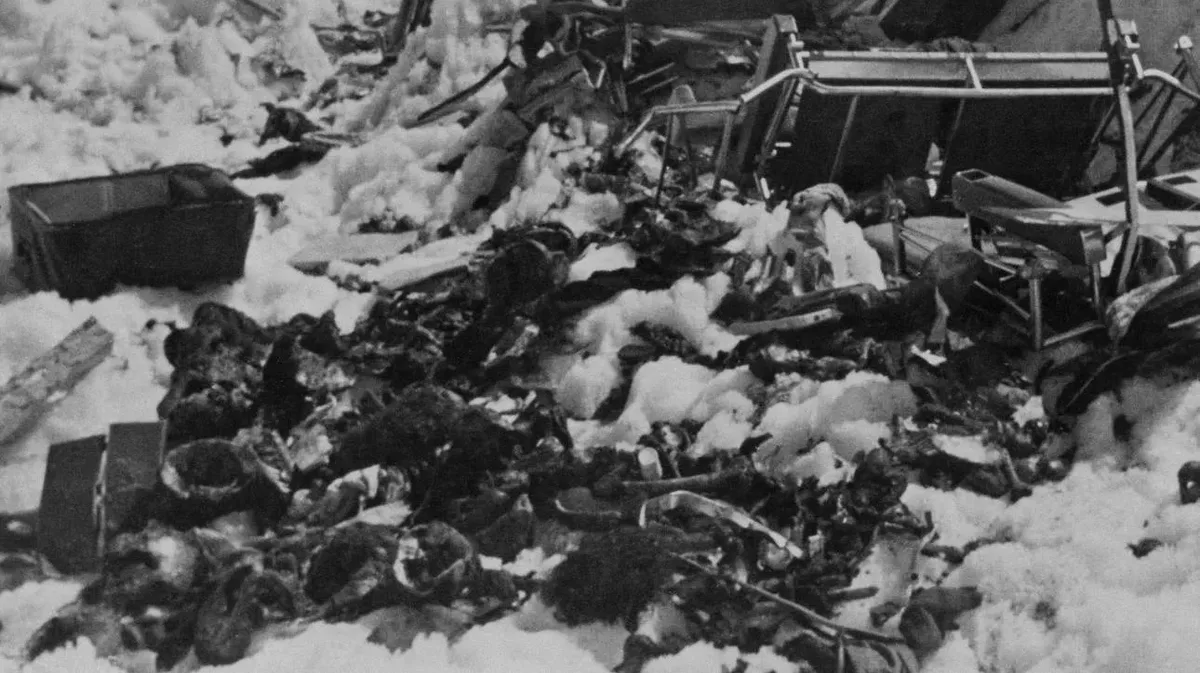
That geography matters to the story. The crash site sat at altitude, far from any road, in terrain where the snow line alone can sit thousands of metres up and glaciers run down toward the valleys. Search aircraft crossed a landscape of white ridges that all looked alike from above. The wreck was white against white. What the sources of the era established, and what later accounts confirmed, is that the initial search was called off before anyone on the mountain was found.
For the survivors, the terrain cut both ways. It hid them from rescue. It also gave them the raw materials — wreckage, snow, altitude shelter — that they would use to stay alive.
What did the survivors endure?
The plain answer: cold, hunger, grief, and an avalanche, in roughly that order. The crash survivors were mostly young — students, athletes, a team travelling together — suddenly responsible for the badly injured in an environment where night temperatures fall far below freezing and the sun at altitude burns through thin air.
They rationed what little food the wreck yielded, and when it ran out they made a decision that has defined the story's reception ever since: they ate the dead. The survivors have spoken about this decision openly for decades, framing it with an unusual moral directness. It was, they have said, a question of survival in a situation with no other option, and it was agreed among them before it was done. The world's fascination and its discomfort both trace to that choice, and to the calm with which the men and women on the mountain explained it afterward.
Then the mountain added a second blow. An avalanche struck the wreck while the survivors were sheltering inside it, killing more of them and burying the fuselage. By the time the ordeal ended, only a minority of those who had survived the crash itself were still alive.
How were they finally rescued?
Two of the survivors, after weeks of failed radio attempts and failed expeditions in every direction, concluded that no one was coming. The rescue, they decided, would have to be manufactured. They sewed gear from materials at hand, prepared the strongest of them for the march, and sent a small expedition west, toward the Chilean side of the range — a direction chosen because the terrain offered a route down in elevation, and lower elevation meant warmer air and, eventually, people. We covered a connected angle in Small farms, global price: the 540,000 families behind Colombian coffee.
The crossing took well over a week of walking through deep snow and thin air. When the two men finally reached a valley with signs of human life, the story turned: a Chilean arriero, or mountain horseman, on the far side of a river, a note tied to a stone and thrown across the water, and then an organized rescue that reached the wreck in stages. Helicopters brought the remaining survivors out over successive days. The ordeal, from takeoff to the last rescue flight, had lasted well over two months.
What this means: why the story endures
Every era retells this story in its own key, and the retellings say as much about the audience as the mountain. There have been books written with the survivors' cooperation, documentary interviews, and a feature film that returned the episode to a global audience. Each version asks the same question in a new accent: what would I have done?
Our analysis is that the story's endurance rests on three things the mountain supplied. First, the setting — a range so vast and so high that it reads as a character, not a backdrop. Second, the decisions: rationing, the agreement about food, the walk west, each one a choice made by amateurs under conditions professionals would call impossible. Third, the aftermath: the survivors did not retreat into silence. They built lives, businesses, families in the region and beyond, and they spent decades answering questions honestly, which is rarer than heroism and harder.
There is also a quieter cultural thread. The Andes have always been a place where survival is a craft — the textile traditions that dress high-altitude life, the herding economies, the knowledge of weather and altitude encoded across generations. Readers who want that wider context will find it in the region's living traditions, from Andean textiles to the high plains further north. The 1972 survivors, in their improvised way, were working the same problem: how human beings persist at 4,000 metres with almost nothing.
What the record still leaves open
The evidence for the broad shape of the story — the date, the flight, the weeks on the mountain, the walk west, the rescue — is deep and consistent across decades of survivor testimony and reporting. What a careful retelling should not do is decorate it. Exact figures on injuries, rations, temperatures and timings vary between accounts, and the survivors themselves have noted that memory under those conditions is imperfect. The honest version of the story holds both things at once: the outline is certain, and the fine detail is human.
What the region watches next, in a sense, is the story itself — how it is passed on, and to whom. The survivors are now old men. The mountain, at 8,900 kilometres long and indifferent as ever, keeps the rest.