Mexico produced about 1.83 trillion dollars in goods and services in 2024, per World Bank data, and the economy keeps drawing companies that want a production base near the United States. The market rewards preparation. Habits around hours and meals decide how fast a first visit turns into a signed deal.
The U.S. International Trade Administration keeps a guide for exactly this homework. Its Mexico edition, last published in February 2026, covers the customs behind doing business in Mexico, from dress to money to visas. The guide reads appearance and courtesy as signals of seriousness, and it treats the business lunch as an instrument rather than a pause.
What Should a First Meeting Look Like?
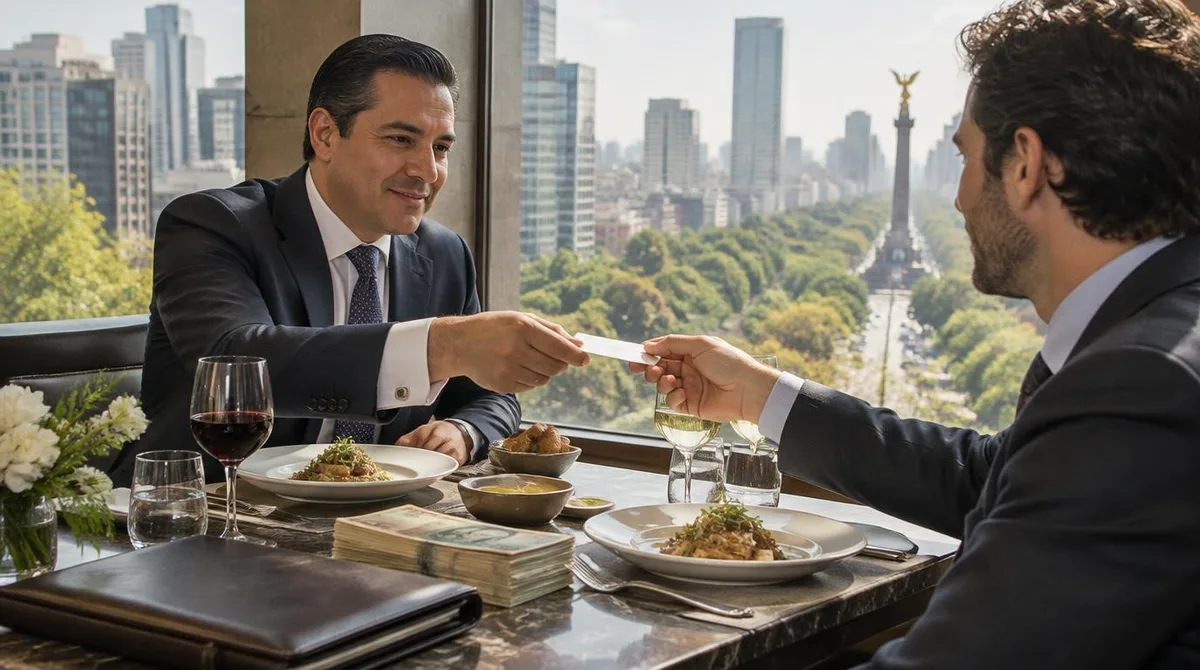
Dress formally, bring plenty of business cards, and let the other side set the tone. The ITA reports that Mexican businesspeople in major cities place a great deal of importance on appearances and often dress more formally than in most U.S. cities. Business cards are used extensively, so the guide's advice is blunt: come with a large supply. For related coverage, see What the 2023 drought taught the world about the Panama Canal.
Mealtimes frame the whole day. Offices often open at 10:00 a.m. and run until 8:00 p.m. or later, per the guide, and the heavy midday meal, called comida, lands after 2:00 p.m. The ITA warns against scheduling meetings between 2:00 p.m. and 4:00 p.m. unless food is on the table.
How Flexible Is Time in Mexican Business?
For business and government appointments, punctuality is the norm. Social time runs looser: guests to events outside northern cities can arrive up to an hour late, per the ITA. The trick is knowing which clock applies, and the guide separates the two cleanly.
The business lunch carries the relationship side. The guide calls it a key tool and recommends using it to build trust and discuss matters in greater leisure. Before any deal talk, it is common to cover family, recent events, or other social themes. Skipping that step reads as impatience.
How Do Money and Paperwork Work?
Mexican pesos are used throughout the country, and paying with U.S. dollars is not legal or common, though border regions and tourist areas sometimes accept them, per the ITA. Budgeting in pesos from the start keeps invoices and expectations aligned.
Paperwork follows a similar logic. A U.S. businessperson who wants to reside and work in Mexico needs a Temporary Mexico Resident Card, valid for up to four years, per the guide. Passports must cover air travel, and passport cards only work within 13 miles of the land border.
How Do Negotiations Usually Move?
Stay patient and keep the tone even. The ITA's advice is direct: do not be overly aggressive while negotiating, because it is considered rude. Deals tend to advance in person, over meals, and across repeat visits rather than in a single trip.
Costs stay predictable when both sides honor that sequence. A visit that skips the meal schedule saves a day now and can spend a quarter later, which is the trade the guide quietly flags for newcomers who treat etiquette as decoration. This connects to our earlier piece, Which Latin American countries have trade deals — and with whom?.
Digital channels handle the small stuff. The guide notes that WhatsApp is popular for quick, informal communication, while formal correspondence stays more formal than typical U.S. practice. Matching that register, in writing and in person, keeps momentum on the visitor's side.
Conclusion: The Pace That Wins in Mexico
The pattern across every section is the same. The market is enormous, and World Bank figures put 2024 output near 1.83 trillion dollars, but the gate is relational: dress the part, respect the meal schedule, and let the lunch do its work.
From here, watch two signals. The ITA refreshes its guidance as conditions change, with the current edition dated February 2026, and the companies that thrive treat each rule as a note on patience rather than a barrier. The first trip opens the file; the fifth closes the deal.