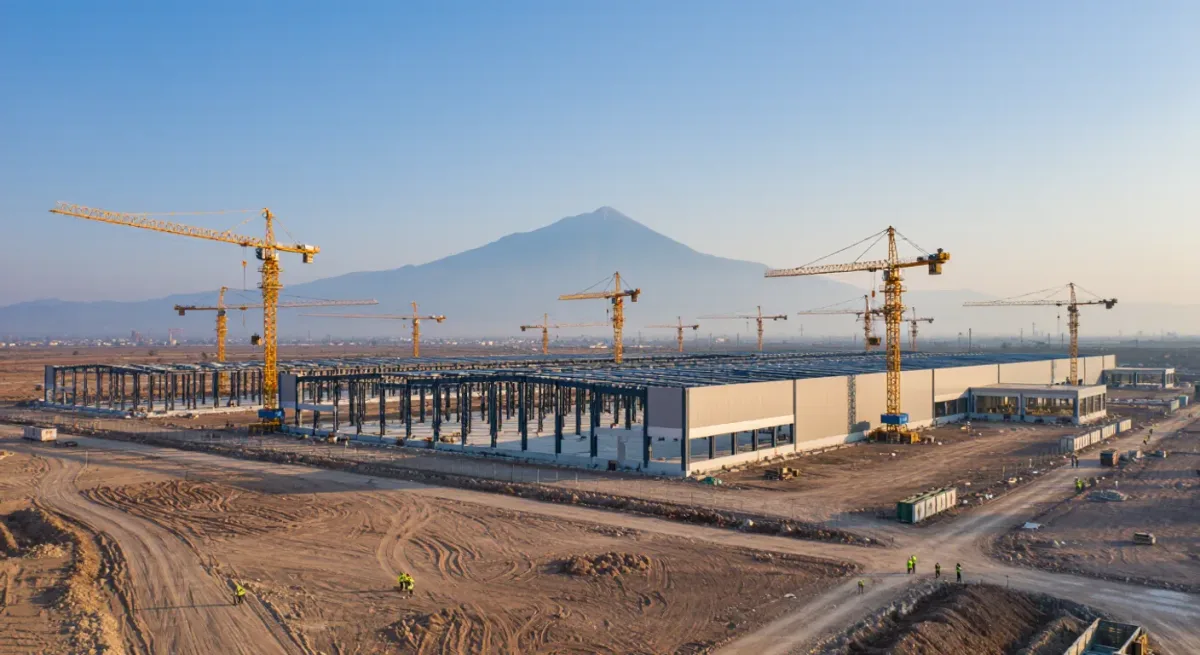
Monterrey is the capital of nearshoring because it offers US manufacturers the combination no Asian site can: a shared 3,000-kilometer border, tariff-free access under the USMCA's regional content rules, time zones aligned with Texas boardrooms, and an industrial ecosystem — steel, glass, plastics, machinery, universities — that has been compounding since the late nineteenth century. When companies decided after 2020 that resilient supply chains were worth paying for, this city of five million was the ready-made answer (SE/INEGI investment data; Nuevo León economic development reporting).
The base that was already there
Monterrey is not a nearshoring creation; it is Mexico's most corporate city, headquarters to Cemex, FEMSA, Alfa and the banking cluster that grew with them. Its engineering schools — Tecnológico de Monterrey above all — graduate the industrial workforce its factories run on, and its business groups have traded with Texas since the railroad era. Nearshoring did not build the machine; it raised the machine's utilization. Foreign direct investment flows into Nuevo León broke records through the early 2020s, at times placing the state among the top recipients of FDI in the country — ahead of far larger economies — with appliance, auto-parts, electronics and semiconductor-adjacent projects leading the announcements (Secretaría de Economía FDI statistics).
- Border logistics: Laredo, the busiest inland trade crossing in the Western Hemisphere, is three hours away by truck.
- Talent: a dense network of technical universities and a labor market seasoned by multinationals.
- Supplier depth: tier-two and tier-three parts makers within driving distance — the variable that decides relocation economics.
- Policy tailwind: the federal Plan México industrial strategy, launched in 2025, formalized nearshoring targets and incentives.
The Tesla test case
The most instructive nearshoring story in Monterrey is the one that has not been built yet. Tesla announced a gigafactory for the city's outskirts in 2023 — the marquee win of the relocation wave — then paused construction while shifting priorities and trade politics played out. The episode taught the local economy two lessons: announcement value is not investment value, and a single mega-project's delay does not stop the underlying flow, because dozens of mid-sized suppliers kept arriving through the same period. Nearshoring in Monterrey is a portfolio, not a bet.
The water problem
Monterrey's constraint is not labor or land; it is water. The metropolitan area sits in a semi-arid basin that has rationed supply during drought years, while semiconductor fabs, data centers and EV plants are all thirsty tenants. The state has responded with dam projects, aqueduct plans and aggressive reuse programs, and industrial users now negotiate water budgets as a condition of site selection. How Nuevo Ángeluz-era infrastructure — the Cebrate and El Cuchillo expansions — sequences against demand growth will decide whether Monterrey can hold its lead; the market is watching the reservoir levels as closely as the FDI announcements (CONAGUA; state water authority data).
| Asset | Nearshoring relevance |
|---|---|
| USMCA access | Tariff-free with regional content compliance |
| Laredo corridor | ~3 hours by truck to the busiest US inland port |
| University system | Engineering pipeline anchored by Tecnológico de Monterrey |
| Corporate base | Cemex, FEMSA, Alfa and supplier ecosystems |
| Constraint | Water availability in a semi-arid basin |
What could unmake it
Three variables, all external. Trade policy: USMCA's review cycle and tariff disputes can reprice Mexican access to the US market faster than any factory can move — a risk examined in detail across our regional coverage. Security: cargo theft and extortion are the tax that never appears in incentive packages; the state has invested heavily in industrial corridor protection. And competition: Vietnam, India and the US South keep improving their offers, while other Mexican states — Querétaro, Baja California — compete for the same projects. Nearshoring is not a law of nature; it is a cost calculation that currently favors Monterrey, refreshed with every freight quote and every policy headline.
The honest outlook
The euphoric projections — Mexico as automatic heir to Asia's manufacturing — have aged poorly; the realistic ones have not. Relocation is happening, incrementally, sector by sector, and Monterrey's share of it is structural: geography cannot be copied, ecosystems take decades, and the border is not moving. The city that Mexican business built for its own reasons has become, almost accidentally, the operational center of North American supply-chain strategy. The task now is infrastructure — water above all — keeping pace with a role the world assigned faster than anyone planned.
The supplier map under the announcements
Nearshoring's real footprint in Monterrey is less the headline factory than the pyramid beneath it. The metro area's industrial base is layered: the appliance corridor — the country's white-goods industry is headquartered or heavily manufactured in and around the city — the automotive-parts tier-twos feeding assembly plants on both sides of the border, metal-mechanical shops, plastics processors and the steel mills that anchor the whole stack. Each relocation announcement above the pyramid pulls a chain of qualified suppliers below it, which is why state officials track supplier-certification programs as seriously as FDI totals: a multinational that arrives to an unqualified supplier base builds slower and imports more, leaking the nearshoring logic it came for.
The labor market tells the same story in units of people. Monterrey's engineering graduation rates, its technical-school pipelines and its wage premium over southern Mexico have long made it the country's most liquid industrial labor market; the nearshoring wave tightened it into genuine scarcity, with operators and maintenance technicians bid across plants and industrial-park construction crews competing with the factories they build. That scarcity is the model's governor: it pushes some lower-value projects to other Mexican states and even other countries, effectively exporting Nuevo León's overflow — a development the state government has stopped pretending to mind.
For the other infrastructure emergency in Mexico's largest cities, read our explainer on Mexico City's water crisis, and follow the whole file in the Mexico section.