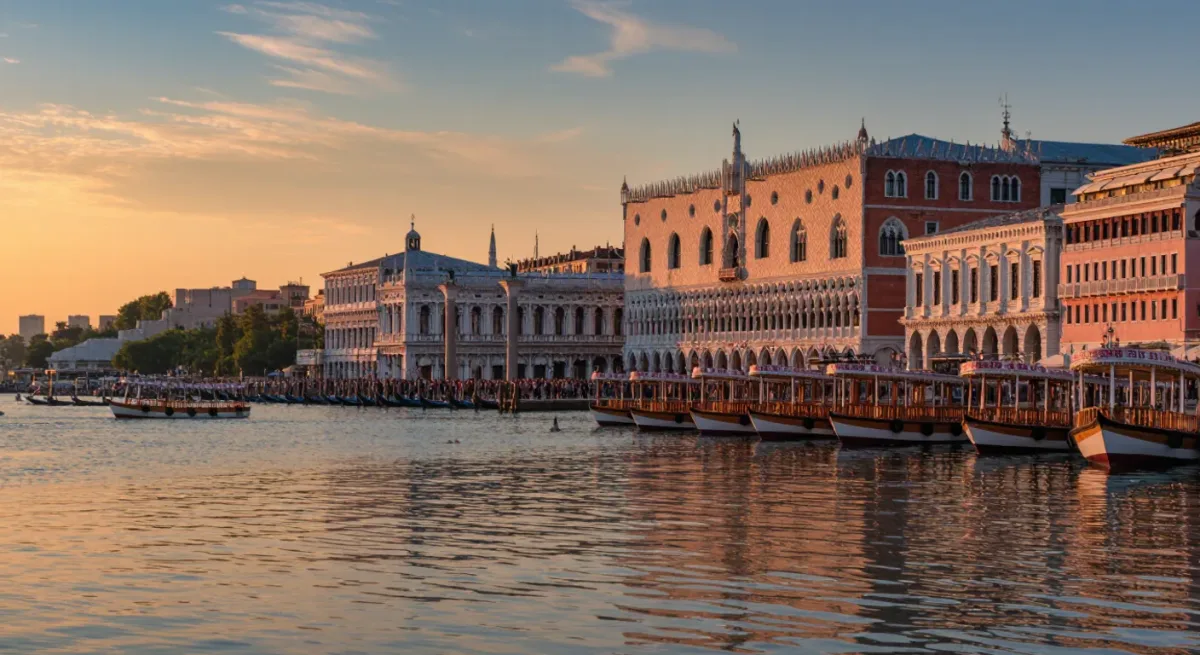
For a Latin American film, the world market has an address: the festival ladder. A premiere at Cannes, Berlin or Venice converts a director's third feature into an international sales asset; San Sebastián's Horizontes Latinos section is the Spanish-language gateway; and each December, Ventana Sur in Buenos Aires — the region's biggest audiovisual market, run with the Cannes market since 2009 — is where the next year's projects find their financing. The circuit is Latin cinema's investment bank: it prices prestige, and prestige is the collateral that buys distribution (festival and market records).
Why festivals are the business
Latin American cinema's domestic economics are thin — small theatrical markets, fragmented distribution, TV money concentrated in telenovelas — so the sector's revenue architecture is built outward: international festival premieres trigger sales-agent deals, territory-by-territory distribution, windowing on streaming platforms, and the national cinema institutes' funding systems, which explicitly weight festival selection in their grants. A Cannes or Venice slot is therefore not a trophy but a financing event: it can double a film's sales price and green-light its director's next project before the home-country release (institute program criteria; industry reporting).
- Cannes, Berlin, Venice: the prestige apex that prices international sales.
- San Sebastián: the Spanish-language festival of record and industry hub.
- Ventana Sur (Buenos Aires): the region's largest content market, matching projects to global finance each December.
- Streaming platforms: the end-buyer that changed the ladder's prize structure.
The record the ladder produced
The system works — the trophy shelf proves it. Mexican directors have won Best Director Oscars in four of the last two decades' strongest years (Cuarón, Iñárritu twice, del Toro); Alfonso Cuarón's 'Roma' (2018) redefined the streamer-as-studio model by winning Venice's Golden Lion and then dominating the awards season as a Netflix release; Chile's 'A Fantastic Woman' (2017) won the country's first Academy Award; Argentina's 'Argentina, 1985' took the 2023 Oscar for international feature. The ladder takes a continent's talent and delivers it to Hollywood's top tier — a talent-export machine whose most successful alumni (del Toro, Cuarón, Iñárritu) now operate as global brands (award records).
What streaming changed
The platforms inverted the ladder's economics. Where a festival premiere once fed a slow theatrical rollout, a streamer can buy worldwide rights at the market and release globally in one night — Latin American titles now top global non-English charts within a release week, an audience scale no arthouse ladder ever delivered. The cost is the ladder's own logic: platform acquisition favors names and concepts over discovery, mid-budget local films have lost the theatrical middle, and festivals increasingly function as the platforms' A&R departments. The industry's current negotiation — in progress at every edition of every festival — is who finances the risky first and second films that generate the celebrated fifth ones (industry analyses).
| Rung | Function |
|---|---|
| National institutes (IMCINE, INCAA, etc.) | Development and production funding |
| Big-three festivals | Prestige pricing, sales launch |
| San Sebastián / Horizontes | Spanish-language industry hub |
| Ventana Sur | Project financing and market deals |
| Streaming / distributors | Global monetization |
The structural fragilities
Two files stay open. Funding politics: the national institutes that feed the ladder depend on public budgets that swing with governments — Argentina's film institute has been politically contested for years, and every austerity cycle thins the pipeline a half-decade later. Language and scarcity: the ladder carries perhaps a hundred films a year to the market's attention from a continent producing many more; for every 'Roma,' hundreds of strong regional premieres never leave home. The circuit's defenders answer that the ladder is not a lottery but a curriculum — directors climb it film by film, and the market's memory is long. Both things are true, which is the definition of an industry.
Why follow it
Because the ladder is where the continent's storytelling capacity is priced — and because each September, Venice's lineup reads like the next two years' prestige-streaming slate in draft form.
The co-production machinery
The ladder's financing runs on treaties most filmgoers have never heard of. Latin American countries maintain bilateral co-production agreements that let a film count as national in each partner's territory — unlocking two or three national funding systems, two or three broadcast pre-sales and the preferential treatment each national screen quota reserves for domestic work. On top sits Ibermedia, the Iberian-American co-production fund created in the late 1990s by the region's audiovisual authorities, which has financed hundreds of films and functions as the continent's de facto development bank for cinema: its project selections signal quality to every other financier on the ladder. A typical 'national' film at Cannes is thus legally several nations at once — an Argentine director, Chilean producer, Spanish and Mexican money, Uruguayan post — assembled through the treaty machinery the way ships were once assembled through trade routes.
The machinery has a strategic effect beyond finance: it keeps the small industries alive. Uruguay, Paraguay, Ecuador and the Central American producing bases participate in continental cinema through co-production shares their domestic markets could never sustain alone; a Uruguayan film can exist because it is 30 percent of a Spanish-Argentine treaty film. The system's fragility is political — each national fund depends on the same public budgets the festival circuit's critics chronicle — but its durability so far is remarkable: Ibermedia and the treaty web have outlasted most of the governments that signed them, which is more than most industrial policies anywhere can claim.
For the current season's Latin American entries on the Lido, read our report from the 2026 Venice festival, and explore the culture and entertainment section.