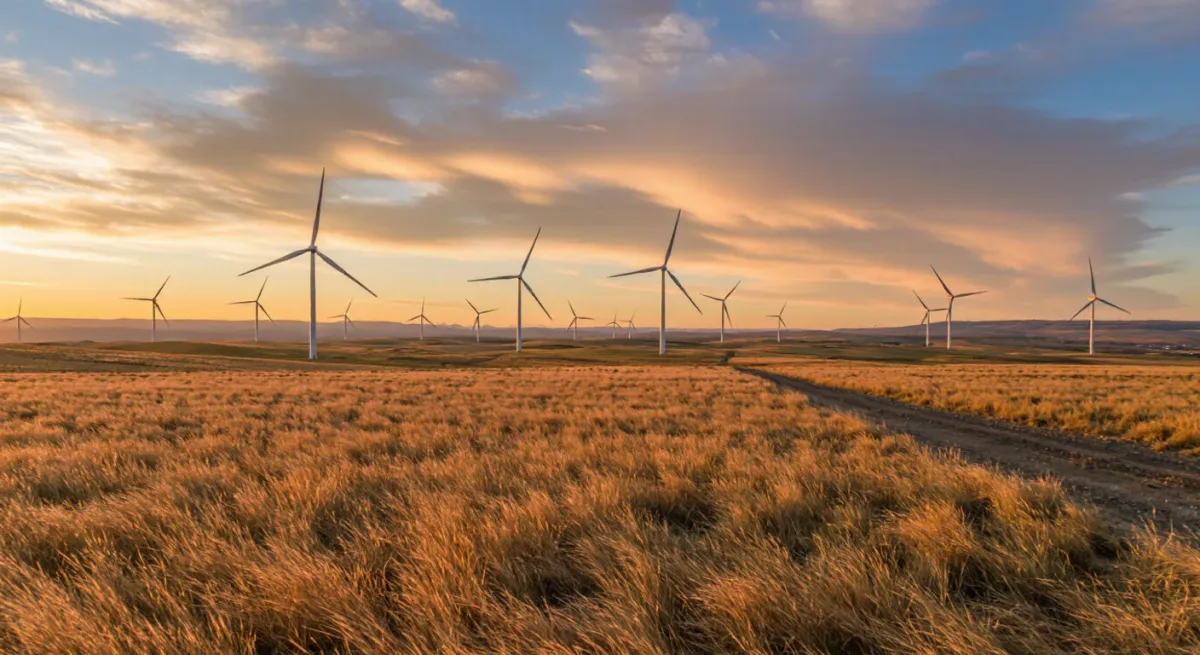
In December 2022, on a wind-blasted plain in Chilean Patagonia, a small plant loaded the world's first commercial shipment of synthetic fuel made from green hydrogen — Haru Oni, a demonstration project backed by HIF Global and Porsche, converting Magallanes' ferocious winds into e-methanol for export. The facility is small; the flag it planted was not. Half a decade into Latin America's green-hydrogen bet, the region holds the sector's most aggressive national strategy, its first operating export projects, and a pipeline of gigawatt-scale announcements whose financing remains the industry's unsolved file (HIF Global/Porsche announcements; national strategy documents).
Chile: strategy first
Chile's 2020 national strategy set the template: target the world's lowest production cost by exploiting the Atacama's solar and Magallanes' wind — arguably the best combined renewables on the planet — with tens of gigawatts of electrolysis mapped in port master plans from Antofagasta to Punta Arenas. The strategy built real machinery: port land allocated, environmental review processes begun, pilot projects commissioned, and a domestic industry association with hundreds of registered initiatives. What it has not yet built is the large-scale FID — the final investment decision on a full commercial export plant — because the buyer side of the market, especially Europe's premium for green molecules, has materialized slower than the 2020 decks assumed (Chilean energy ministry; CORFO program record).
- Chile: the strategy pioneer — Atacama solar, Magallanes wind, Haru Oni operating.
- Brazil: the scale play — Pecém and Açu ports in the northeast anchoring hydrogen and ammonia hub plans on world-class wind and solar.
- Uruguay: the quiet planner — a 2023 roadmap built on existing renewables surplus.
- Colombia: La Guajira's wind pairing hydrogen in the national pipeline.
Brazil: the scale argument
Brazil's entry inverts Chile's: less strategy, more endowment. The country already runs one of the world's cleanest power matrices, and its northeast — where onshore wind capacity has grown explosively around the Bahia-Ceará-Rio Grande do Norte corridor — offers combination solar-wind profiles that raise electrolyzer utilization, the single biggest cost driver. The port hubs of Pecém (Ceará) and Açu (Rio de Janeiro) have signed protocols with European and domestic energy companies for ammonia and hydrogen export plants, and Brazilian projects benefit from an existing ammonia industry and shipping infrastructure no greenfield market possesses. Brazil's bet is that when the market arrives, scale wins; the country has taken a single-step approach, low on announcements per minister, high on gigawatts per announcement (port authority records; company protocols).
The waiting problem
The industry's honest ledger: electrolyzer costs remain high, offtake contracts scarce, and the US and EU subsidy regimes have pulled capital toward their own markets while import-side instruments (the EU's hydrogen auctions, bilateral offtake deals) mature slowly. Latin America's projects therefore bifurcate — pilots and mid-sized ammonia conversions moving on real contracts; the ten-gigawatt export complexes waiting for a bankable buyer. Meanwhile the region's comparative advantage keeps improving quietly: renewables costs fall every cycle, and every electrolyzer supplier now lists a Latin American partnership. The sector's veterans describe the phase without embarrassment: the resource is proven, the technology works, the customers are late.
| Country | Position |
|---|---|
| Chile | First national strategy (2020); Haru Oni operating since 2022 |
| Brazil | Port-led hub model; scale endowment |
| Uruguay | Planning built on renewable surplus |
| Colombia | La Guajira wind integration |
What to watch
Two indicators cut through the announcement fog: final investment decisions — each FID on a Latin American export plant moves the sector more than a hundred MOUs — and the EU's import auction results, which set the price the region's molecules can actually earn. Beyond them: ammonia as the Trojan horse (the molecule the infrastructure already exists to ship), and the honest wildcard, natural hydrogen and blue-hydrogen competition from cheaper gas provinces. Latin America's green bet has always been a bet on the world's carbon arithmetic firming up; the region's wind and sun have done their part on schedule.
Why ammonia goes first
The industry's first bankable molecules will not be hydrogen at all, and the reason is infrastructure that already exists. Ammonia — hydrogen chemically bound to nitrogen — is one of the world's largest-volume industrial commodities, shipped for decades in a mature tanker, port and storage network; converting green hydrogen into green ammonia lets a Latin American project plug into export infrastructure no pure-hydrogen corridor offers. The commercial logic writes itself: green ammonia for fertilizer displacing the fossil-based product, ammonia as a shipping fuel as maritime decarbonization rules bite, and ammonia as a hydrogen carrier cracked back at destination. The region's port-hub plans — Pecém and Açu in Brazil, Chile's northern terminals — are ammonia-first in their engineering precisely because the buyer exists today in a form that can sign a contract.
Brazil adds a domestic rationale the other hubs lack: the country is one of the world's largest fertilizer importers, and every tonne of green ammonia produced at Pecém substitutes an import while serving the world's largest soy complex's nutrient demand. A transition industry that usually depends on European offtake premiums has, in Brazil's case, a home market whose scale alone could anchor the first projects — the difference between a strategic bet and a subsidized export, and the quiet argument why the country's less-strategic approach may out-execute the region's most-strategic one.
The region's quiet advantage is timing: with Europe and Japan contracting early supply to seed their industries, the first movers' projects — however small — are buying learning-curve position in a market that scales later this decade.
For the other transition commodity where Latin America already leads, read our analysis of the Andes' copper supply core, and explore the Latin America business section.